


Alerts from Our Foreign Offices. IP News Review from Russia & CIS (March – August 2025)
9 December 2025Alerts from Our Foreign Offices
On Administrative Liability for Infringements ff Intellectual Property Rights in the Kyrgyz Republic
Geographical Indications are Coming into Play in Uae
IP News Review from Russia & CIS (March – August 2025)
РОССИЯ:
Government Acts and Departmental Acts
Disputes over Granting and Termination of Protection
Disputes on Infringement of Exclusive Rights
Rospatent Practice
1. Well-Known Trade Marks
2. Names of Places of Origin of Goods (Poo) and Geographical Indications (Gi)
CIS
1. Eurasian Patent Organization
2. Georgia
3. Belarus
4. Kazakhstan
5. Uzbekistan
Alerts from Our Foreign Offices
On the Introduction of Protection for Unregistered Industrial Designs in the Republic of Kazakhstan: Legal Analysis and Practical Implications
Arman Sauganbaev
Kazakh Patent Attorney Eurasian Patent & Design Attorney
Regional Director (Astana)
Toleubek Akzamov
Lawyer
1. Introduction: Changes in legal regulation
On August 21, 2022, Law of the Republic of Kazakhstan № 128-VII “On Amendments and Additions to Certain Legislative Acts of the Republic of Kazakhstan on Improving Legislation in the Spheres of Intellectual Property and Providing State-Guaranteed Legal Assistance” entered into force, introducing Article 34–1 into the Patent Law of the Republic of Kazakhstan.
This provision establishes protection for unregistered industrial designs, which represents a significant change to the previously existing legal regime, under which protection was provided solely on the basis of registration in the relevant state register and the issuance of a patent. This alert contains an analysis of the new legal institution, examines existing judicial practice, and formulates recommendations for copyright holders.
2. Legal conditions of protection in accordance with Article 34–1 of the Patent Law of the Republic of Kazakhstan
In accordance with the new version of the Patent Law, an industrial design that meets the established criteria is protected without registration for three years from the date of its first publication in the territory of the Republic of Kazakhstan.
2.1. Protectability criteria:
Novelty: A design is considered new if, prior to its first publication in the Republic of Kazakhstan, no identical industrial design has been published. Disclosure of information containing details of the industrial design to third parties under confidentiality does not impair its novelty.
Originality: A sample is considered original if its essential features are determined by the creative nature of the product’s characteristics.
2.2. Actions considered disclosure:
The first publication is recognized as the first publication, display at an exhibition, use in civil circulation or communication of information about it to an indefinite number of persons, including specialized circles operating in the relevant area of entrepreneurial activity in the Republic of Kazakhstan.
3. Analysis of judicial practice before and after the introduction of the amendment
3.1. Practice until 2022
Before the amendments, legal disputes were based solely on establishing the fact of infringement of the exclusive rights guaranteed by a patent. The subject of proof was the existence of identity or similarity to the point of confusion between the patented design and the object used by the defendant. The courts did not examine the validity of the patent grant.
3.2. The first precedent for the application of Article 34–1 (Resolution of the Supreme Court of the Republic of Kazakhstan, 2024–2025)
Case Facts: The plaintiff, who is the patent holder, filed a lawsuit to prohibit the defendant from using an industrial design of furniture in a retail facility and in advertising materials on Instagram.
Progress of the trial: The court of first instance granted the claim. The appellate court overturned the decision, citing the defendant’s right of prior use.
The Supreme Court overturned the appellate court’s ruling and upheld the first instance court’s decision.
Legal position of the Supreme Court: The court found that the plaintiff’s industrial design was subject to protection as unregistered on the basis of Article 34–1 of the Patent Law.
It was noted that the defendant did not provide evidence confirming the creation of an identical industrial design before the plaintiff’s priority date, which precludes the application of the right of prior use. The court took into account the conclusion of the State Enterprise “NIIS” on the coincidence of the essential features of the disputed objects.
4. Legal implications and recommendations for copyright holders
4.1. Comparative table of security modes
|
Criterion |
Registered industrial design |
Unregistered industrial design |
|---|---|---|
|
Basis of protection |
Issued patent |
The fact of publication of a sample that meets the criteria in the Republic of Kazakhstan |
|
Period of protection |
10 years (with the possibility of extension, for a total period ofup to 25 years from the date of application) |
3 years from the date of first publication |
|
Presumption of legitimacy of protection |
The patent is valid until it is challenged and declared invalid |
Proof of novelty and originality is required in every dispute. |
|
Distribution of the burden of proof |
Easy — Patent Submission |
Complex — proving novelty, originality, date and fact of publication |
4.2. Potential legal risks
Risk for the plaintiff: Significant complication of the proof process due to the need to establish novelty, originality and the fact of first publication. Risk for the defendant: The emergence of a new basis for liability not related to the registration of the property. Systemic risk: Potential for an increase in the number of “patent trolls” exploiting the mechanism for protecting unregistered objects.
4.3. Recommended actions for copyright holders:
For objects with long-term commercial value, it is recommended to maintain the practice of state registration and obtaining a patent.
When using the protection regime for unregistered industrial designs, it is necessary to ensure that the date and method of first publication are recorded, including by: Notarial certification of Internet pages and publications. Preservation of all materials confirming participation in exhibitions (contracts, catalogues, photo reports). Formation of a dossier containing source materials for the creation of a sample (sketches, drawings, prototypes).
Recording the first facts of introducing a product into civil circulation (supply contracts, invoices).
5. Conclusion
The introduction of the institution of protection for unregistered industrial designs into Kazakhstani legislation is consistent with modern international approaches and expands the ability of copyright holders to protect their rights.
However, the application of this new mechanism is associated with significant procedural risks associated with proving the object’s compliance with the protectability criteria. Therefore, effective protection of industrial design rights requires the development of a tailored legal strategy that takes into account the specifics of the object and the long-term business goals of the copyright holder.
Our specialists are ready to provide comprehensive legal support, including consultations on the application of the new legal regime, the development of internal documentation procedures, and representation in litigation.
On Administrative Liability for Infringements of Intellectual Property Rights in the Kyrgyz Republic
Cholpon Dootalieva
Kyrgyz Patent Attorney
Regional Director (Bishkek)
The legislation of the Kyrgyz Republic provides for civil, administrative, and criminal liability for violations infringing upon intellectual property rights.
Administrative liability, pursuant to the Code of Offenses of the Kyrgyz Republic, is established for infringements of copyright and related rights, violations of the exclusive rights of patent holders, and unauthorized use of means of individualization of goods (works, services).
Cases concerning offenses infringing upon intellectual property rights are considered by the authorized body in the field of intellectual property.
Grounds for initiating proceedings in cases of administrative offenses include: the direct detection by the authorized body of sufficient data indicating the occurrence of an offense; materials received from law enforcement agencies or other state bodies, local self-government authorities containing data indicating the occurrence of an offense; as well as communications and statements from individuals and legal entities; and reports from other sources of information (including mass media and the Internet), including video or photographic materials containing data indicating the occurrence of an offense.
The fine for the unlawful use of another’s trademark, service mark, appellation of origin, or designations confusingly similar thereto for identical or similar goods, where the act does not constitute a criminal offense, is 5,500 KGS for individuals and 17,000 KGS for legal entities.
The authorized body in the case of an administrative offense shall issue one of the following rulings:
- to impose a penalty;
- to terminate the proceedings;
- to impose a late payment penalty.
In the event of the failure by the liable party to pay the fine and the maximum amount of the penalty, as provided by the Code of Offenses of the Kyrgyz Republic, being reached, the authorized body shall issue a ruling on the imposition of a late payment penalty.
The ruling on the imposition of the late payment penalty, specifying its amount, as well as the amount of the fine and the total amount subject to recovery, shall be forwarded to the authorized state body responsible for the organization of the activities of judicial enforcement officers for enforcement in accordance with the legislation on enforcement proceedings.
The ruling of the authorized body in the case of an administrative offense may be appealed to the district (city) court.
In 2023, the authorized body in the field of intellectual property received 39 complaints concerning offenses in the field of intellectual property. In 2024, 48 complaints were received.
Geographical Indications are Coming into Play in Uae
Alexey Kratiuk
Partner
Russian Trademark & Design Attorney
Eurasian Design Attorney
Head of Trademark Department (Moscow)
Sergey Medvedev
Ph.D., LL.M.
Partner (Dubai)
Indeed, the phenomenal story of population of the brand ‘Dubai Chocolate’ that has become an icon brand used in connection with a specific type of chocolate produced locally in Dubai and its world-wide reputation and booming sales on the global market might have provoked an interest in protecting traditional local products (originating from UAE) that possess certain qualities and reputation due to their origin as intellectual property (IP).
Fortunately, Federal Decree-Law № 36 of 2021 On Trademarks issued on 20 September 2021 (the ‘UAE Trademark Law’) officially recognizes and provides legal protection to geographical indications that can be registered in UAE in relation to local or foreign traditional products to secure their reputation. According to Article 38 of the UAE Trademark Law a geographical indication (the ‘GI’) may be a sign or a group of signs in any form whatsoever, such as words, including geographical or personal names, letters, numbers, holographic elements, color or colors.
In practice, GI is commonly used to identify a product that has a specific geographical origin and possess quality or reputation due to that origin. Normally, natural conditions and/or human factors attached to the territory from which a traditional product comes would give a strong impact on characteristics and reputation of that particular product.
Interestingly, Article 38 of the UAE Trademark Law mentions that GI can be registered as a trademark in UAE, what makes it quite different from regulations effected and adopted in some other jurisdictions, where GI is recognized as a separate IP subject matter along with trademarks, copyrighted works, designs, etc. As stipulated by Article 44 of the UAE Trademark Law, the registration proceedings for GIs are basically the same as for ordinary trademarks. In addition, the rights to GIs can be assigned or licensed, as well as enforced against third parties, including by way of a compensation claim related to an infringement act.
Importantly, GI shall not be registered if it is confusingly similar to a third party trademark, whether registered or pending, or simply pre-existing, provided the trademark rights therein have been acquired through a bona-fide use. As mentioned in Article 43 of the UAE Trademark Law, confusion between an earlier trademark and the GI will be a key factor for non-registration of the latter.
Obviously, not only local products, but also foreign ones with certain reputed features can enjoy protection in UAE as long as the foreign GI remains valid in the country of origin. Also, all GIs with similar names shall enjoy protection, as stipulated by law, provided that their producers are treated fairly, and their consumers are not misled (Article 41 of the UAE Trademark Law).
Recently, the UAE Ministry of Economy & Tourism (the ‘Ministry’) has announced a launch of the GI-system for national products to effectively protect domestic products from specific geographical regions in the UAE. This initiative of the Ministry will obviously give an opportunity for the local and traditional products to become renowned worldwide and achieve the respective level of protection in the most effective way. As a first step, four (4) national products were announced as deserving the GI-protection-status, and now they are being registered by the Ministry. Among those products are honey and dates. It goes without saying that this is just the beginning of the practical development of the GI-protection-system in the UAE which shall bring traditional products to a new level of awareness and reputation among consumers all over the world. Hopefully, we will see much more products to be protected and more applications for GIs to be filed in the near future. UAE has become one of the key global markets for distribution of traditional products in various industries.
***
These alerts are for informational purposes only and does not constitute legal advice. For advice specific to your situation, please contact our specialists.
IP News Review from Russia & CIS (March – August 2025)
Laws and Bills
Strengthening criminal liability for the illegal acquisition and use of information constituting a secret protected by law (Federal law dated June 24, 2025 № 175-FZ)
The law toughens penalties for the illegal acquisition, disclosure, and use of information constituting commercial, tax, or banking secrets.
For illegal disclosure or use of information constituting a commercial, tax or banking secret, without the consent of its owner by a person to whom it was entrusted or became known through service or work, committed by a group of persons by prior conspiracy or an organized group, as well as causing major damage or committed out of selfish interest (Part 3 of Article 183 of the Criminal Code of the Russian Federation), the main punishment provided for is forced labor for a term of up to 5 years with the deprivation of the right to hold certain positions or engage in certain activities for a term of up to 3 years or imprisonment for a term of 2 to 5 years, and as an optional additional penalty — a fine of up to 5 million rubles or in the amount of the wages or other income of the convicted person for a period of up to 5 years.
For the same actions that resulted in grave consequences (Part 4 of Article 183 of the Criminal Code of the Russian Federation), the punishment provided is forced labor for up to 5 years or imprisonment for a term of 3 to 7 years and an additional optional punishment in the form of a fine in the amount of 1 million to 5 million rubles or in the amount of the salary or other income of the convicted person for a period of 1 year to 5 years.
Increasing the period of “novelty benefit” (Federal law dated July 23, 2025 № 235-FZ)
As a result of the adoption of the aforementioned law (which entered into force on August 3, 2025), the term of the so-called “author’s novelty exemption” for invention applications (Clause 3, Article 1350 of the Civil Code of the Russian Federation) was doubled — from six months to one year. However, the term of this exemption for utility model applications (Clause 3, Article 1351) remained the same — six months — and for industrial designs, it remains at 12 months.
This means that after the invention has been disclosed through any publication, speech, exhibition or public use, the owner of the invention will have one year to file an application for the invention without loss of novelty as a result of such disclosure.
Given that an invention application can be converted into a utility model application, it’s interesting to see how the difference in the grace period will work. It’s conceivable that a disclosure that doesn’t undermine the novelty of an invention could be challenged on the grounds of novelty if the invention application is converted into a utility model application.
Simplification of the procedure for certification and registration of patent attorneys (Federal law dated July 31, 2025 № 304-FZ, Federal law dated December 26, 2024 № 494-FZ)
Federal Law № 494-FZ of December 26, 2024, “On Amendments to Certain Legislative Acts of the Russian Federation”, amended the Law “On Patent Attorneys”. These amendments changed the procedure for registering patent attorneys with Rospatent and introduced a registry-based model for the provision of patent attorney registration services by Rospatent. As a result, patent attorneys can now be registered within one day of the qualification commission’s decision on certification, without the need to submit a separate application or pay a fee. However, the issuance of a patent attorney registration certificate is not provided. Patent attorney status is confirmed by an entry in the registry. The amendments came into effect on September 1, 2025.
Even before Federal Law № 494-FZ entered into force, Federal Law № 304-FZ of July 31, 2025, “On Amendments to Certain Legislative Acts of the Russian Federation”, was adopted, aimed at further simplifying various registration procedures, including the procedure for registering patent attorneys.
In particular, thanks to amendments to Article 6 of the Patent Attorney Law, applications for certification as a patent attorney, which will now be submitted electronically only, will no longer require documents on education and work experience. The only document required (if any) is a copy of the recommendation issued following an internship as a patent attorney candidate. Rospatent will independently request information on education and work experience through interdepartmental electronic communication channels; only if such information is insufficient to confirm compliance with the statutory requirements for education and work experience will Rospatent request the relevant information from the applicant.
The decision on the results of the qualification exam will now be made within 10 days, rather than one month as before.
Following amendments to Article 8 of the Law on Patent Attorneys, any person who becomes aware of circumstances specified in the law as grounds for such exclusion may file an application to remove a patent attorney from the Register of Patent Attorneys of the Russian Federation. Until now, this issue has not been addressed by law.
Compensation for violation of intellectual property rights — new rules (Federal law dated July 7, 2025 № 214-FZ)
On July 7, 2025, the Federal Law “On Amendments to Part Four of the Civil Code of the Russian Federation” (№ 214- FZ) was published. The new law (№ 214-FZ) introduces, in particular, the following changes.
Article 1252 of the Civil Code of the Russian Federation establishes that the violation of exclusive rights is recognized as the illegal use of one result of intellectual activity or means of individualization in any one way. A new article 1252.1 is being introduced, which sets out the basic principles for determining compensation in various situations.
Specifically, the new article stipulates that compensation may also be collected for actions that, while not technically considered infringements of exclusive rights, contribute to such infringement. This applies to actions involving the circumvention of technical copyright protection measures (Article 1299 of the Civil Code of the Russian Federation) and the removal of copyright information from a copy of a work (Article 1300 of the Civil Code of the Russian Federation).
It is established that compensation is not required for the use of a result of intellectual activity (RIA) or means of individualization (MI) that has no independent economic significance but is necessary for another method of use. It is also determined that the use of a work without attribution, but with attribution, does not constitute an infringement of the exclusive right if the source does not include the author’s name.
The new article retains three options for determining the amount of compensation: a fixed amount; an amount equal to a multiple of the value of the counterfeit goods; or an amount equal to a multiple of the value of the right to use the object of rights under comparable circumstances. Moreover, the court has the right to award compensation in a fixed amount even if the plaintiff has chosen a different compensation calculation option, but the chosen method of calculating compensation is not applicable to the circumstances of the infringement of the exclusive right.
The new article details the procedure for calculating compensation in cases where multiple intellectual property rights or information systems are illegally used in a single counterfeit tangible medium, as well as when multiple individuals independently infringe an exclusive right using the same counterfeit tangible medium. In the latter case, the court may award compensation jointly and severally to the infringers.
It is established that in the event that the right to an intellectual property or a scientific work belongs to several copyright holders, the compensation collected by any of them for the violation of the exclusive right to such an object must be distributed among all copyright holders.
It is established that the court may determine the amount of compensation below the limits specified by the Civil Code of the Russian Federation (in particular, within the range of ten thousand to five hundred thousand rubles or within the range of one to two times the cost of counterfeit material media or the right to use an intellectual property object), if the infringer — an individual entrepreneur — did not know and should not have known that he was committing a violation of an exclusive right.
The article establishing the specifics of protecting the rights of a licensee (Article 1254 of the Civil Code of the Russian Federation) further stipulates that the claims of the copyright holder and the exclusive licensee who have filed a claim for compensation in court are joint and several.
Articles establishing liability for infringement of exclusive rights to certain intellectual property objects (Articles 1301, 1311, 1406.1, 1515 and 1537 of the Civil Code of the Russian Federation) establish minimum and maximum compensation limits. Specifically, the maximum compensation for infringement of exclusive rights to a work, related rights, invention, utility model, or industrial design, and for the illegal use of a trademark is increased from five to ten million rubles. For patent rights, the minimum compensation is also increased (from ten to fifty thousand rubles). For geographical indications and appellations of origin, only a fixed amount of compensation is possible.
Overall, the changes are aimed at establishing a fairer amount of compensation for the violation of exclusive rights to intellectual property, taking into account all the circumstances of such violation.
The changes introduced by the law will come into force on January 4, 2026.
According to paragraph 25 of Resolution № 10 of the Plenum of the Supreme Court of the Russian Federation, penalties for infringement of intellectual property rights and means of individualization are applied based on the legislation in effect at the time of the infringement.
This means that the new rules for determining compensation will only apply to infringements committed beginning January 4, 2006.
Responsibility for improper use of warning markings of AOG and GI (Federal law dated July 26, 2019 № 230-FZ)
On July 28, 2025, an amendment to paragraph 3 of Article 1537 of the Civil Code of the Russian Federation came into force. This amendment was introduced by a law adopted six years ago (№ 230-FZ of July 26, 2019); the same law that established the protection Geographical indications (GI) in the Civil Code alongside the protection of Appellations of origin of goods (AOG).
The new version of paragraph 3 of Article 1537 of the Civil Code of the Russian Federation, which has entered into force, stipulates that persons using warning markings (AOG and GI) or similar designations in relation to designations not registered in the Russian Federation, or using such markings on goods that do not possess the characteristics specified in the State Register, are liable in accordance with the established procedure.
When the law was adopted, it was apparently intended to establish (update) such liability and the procedure for bringing to it, but instead, last year the clause on the improper use of warning markings was completely excluded from Article 180 of the Criminal Code of the Russian Federation (Law of 06.04.2024 № 79-FZ).
There is currently no administrative liability for improper use of warning labels, unless Article 14.8 (consumer fraud) is applied to this act.
So the change that came into force turned out to be powerless for now.
On patenting IT inventions (Bill dated May 2, 2025 № 922784–8)
In May, a bill “On Amendments to Part Four of the Civil Code of the Russian Federation” was introduced to the State Duma (draft dated 21.05.2025 № 922784–8).
According to the bill’s authors, the proposed amendments will make it possible to grant patent protection to technical solutions implemented by a programmable device (computer) under the control of a computer program. As stated in the explanatory note to the bill, the proposed amendments “ allow for the possibility of obtaining patent protection for inventions that use machine learning systems, including deep learning, known as ‘artificial intelligence.’”
Articles 1350 and 1351 of the Civil Code of the Russian Federation propose specifying that a technical solution implemented in a programmable device, or related to a method implemented using such a device, is also protected as an invention; and a technical solution implemented in a programmable device is also protected as a utility model.
In addition, with regard to industrial designs, the bill provides for the addition of Article 1352 of the Civil Code of the Russian Federation with the indication that the graphical interface of a computer program or its component part that has independent significance is also protected as an industrial design.
The bill also proposes expanding the product categories that inventions may include (in addition to devices, substances, microbial strains, and plant or animal cell cultures) to include “systems” and “complexes,” as well as “protein and genetic constructs.” As a result, it proposes legislatively codifying Rospatent’s established practice of protecting utility models, according to which systems and complexes are not included within the definition of devices and cannot be protected by a utility model patent.
The Constitutional Court verified the constitutionality of paragraph 3 of Article 1033 of the Civil Code of the Russian Federation (Resolution Constitutional courts dated July 8, 2025 № 28-P)
Clause 1 of Article 1033 of the Civil Code of the Russian Federation contains a list of permissible restrictions on the rights of the parties to a commercial concession agreement that may be provided for by it, including a negative obligation of the user not to sell similar goods, perform similar work, or provide similar services using trademarks or commercial designations of other copyright holders.
At the same time, in accordance with paragraph 3 of Article 1033 of the Civil Code of the Russian Federation, such restrictive conditions may be declared invalid at the request of the antimonopoly authority if these conditions, taking into account the state of the relevant market and the economic situation of the parties, contradict antimonopoly legislation.
TARKETT RUS, a joint-stock company, entered into commercial concession agreements with distributors, under which, for a fee, it transferred to them a ready-made business model with the ability to exercise a set of exclusive rights. The terms of the agreements, however, prohibited the contractors from advertising and selling similar products from other manufacturers.
The Federal Antimonopoly Service concluded that these bans violate competition law, as they hinder other economic entities’ access to the relevant product market. The company was ordered to take a number of actions aimed at ensuring competition.
According to JSC TARKETT RUS, paragraph 3 of Article 1033 of the Civil Code of the Russian Federation contradicts a number of articles of the Constitution of the Russian Federation to the extent that, due to the uncertainty of its content and the meaning given to it by law enforcement practice, it allows antitrust authorities to recognize the terms of an agreement as invalid due to non-compliance with antitrust legislation, bypassing the judicial procedure and without taking into account the exceptions (immunities) established for commercial concession agreements.
The Constitutional Court noted that the reference in paragraph 3 of Article 1033 of the Civil Code of the Russian Federation to the possibility of recognizing restrictive terms of a commercial concession agreement as invalid in court does not deprive the antimonopoly authority of the right to initiate cases regarding the violation of antimonopoly legislation, to analyze the actions of the parties to the commercial concession agreement for their compliance with the requirements of antimonopoly legislation, and to decide on the possibility or impossibility of applying antimonopoly immunities.
Thus, paragraph 3 of Article 1033 of the Civil Code of the Russian Federation does not contradict the Constitution, since it does not prevent the antimonopoly authority from recognizing individual restrictive terms of a commercial concession agreement as contrary to antimonopoly legislation, which in itself does not entail recognizing these terms of the agreement as invalid, taking into account the possibility of filing relevant claims in court.
Government Acts and Departmental Acts
The government has authorized the use of Novo Nordisk (Denmark) inventions in the interests of protecting the life and health of citizens (Order Governments Russian Federation dated May 22, 2025 № 1291‑p)
In accordance with Article 1360 of the Civil Code of the Russian Federation, due to extreme necessity related to the protection of life and health of citizens, in order to provide the population of Russia with medicinal products based on the active substance “semaglutide“, the Government has permitted GEROPHARM LLC to use inventions protected by patents № 2434019, 2643515, 2657573, 2768283, 2777600, owned by Novo Nordisk A/S (Denmark), without the consent of the patent holder. The permit is valid until the end of 2025.
Previously, similar permits were issued to PSC Pharma LLC (order Governments Russian Federation dated November 15, 2024 № 3286‑r) and PROMOMED RUS LLC (order Governments Russian Federation dated December 21, 2024 № 3930‑r) and the Supreme Court confirmed their legality (decision of the Supreme Court of the Russian Federation dated May 06, 2025 № AKPI25–102 and the appellate ruling dated July 29, 2025 № APL25–176).
Changes have been made to the list of goods permitted for parallel import (Order Ministry of Industry and Trade dated April 01, 2025 № 1572)
The order of the Ministry of Industry and Trade amended the list of imported goods (groups of goods) to which the provisions of the Civil Code on the protection of exclusive rights do not apply, provided that such goods are placed into circulation outside the territory of the Russian Federation by the copyright holders or with their consent.
Among the changes, we note the exclusion of cosmetics, makeup, and skin care products (except medicinal ones), including sunscreens and tanning products, as well as manicure and pedicure products (TN VED 3304), from those permitted for parallel import. Furthermore, while previously the trademarks excluded from parallel import approval for perfumes, cosmetics, hygiene products, and toilet products (in TN VED groups 3303–3307) were listed, the amended list now includes trademarks for which parallel import is permitted.
At the same time, Hewlett Packard and Fujitsu laptops (TN VED 8471), as well as scanners, copying machines and printers of the Fujifilm, Fujitsu and Toshiba brands (TN VED 8443) were removed from the list of items permitted for parallel import.
The above changes came into effect on October 30, 2025.
And from May 1, 2025, in addition to Harley-Davidson motorcycles, parallel import of several other brands of powerful motorcycles will be permitted, including Aprilia, BMW, Ducati, Honda, KTM, MV Agusta, Suzuki and Triumph (TN VED 8711).
Disputes over Granting and Termination of Protection
Following a lawsuit filed by a company from the Seychelles, the protection of a Japanese trademark owner was terminated early (Decision SIP dated August 8, 2025 by case № SIP‑1192/2024)
 At the suit of the company Qmed BioTech Corp from the Seychelles has prematurely terminated the protection of the Refinex trademark under international registration № 1520316 for the designation owned by KC Pharmaceuticals (Japan).
In support of its interest, the plaintiff cited, among other things, its filed application № 2021723172 for the designation; that, since 2023, the plaintiff has registered the REFINEX.RU domain, which houses the plaintiff’s website with information about the products it plans to manufacture.
In addition, the court took into account the fact that the plaintiff is an international biotechnology corporation, also operates in the territory of the European Union, and has a registered trademark “REFINEX REFINEX “ under certificate № 018453203 in the European Union.
The defendant’s argument that the plaintiff was acting in bad faith by choosing as its trademark a designation virtually identical to another party’s trademark failed to convince the court. The court considered the plaintiff’s evidence of interest and found the plaintiff to be an interested party.
The court considered the evidence of use presented by the defendant to be evidence of fictitious use: the supply of goods to Russia was only worth 590 thousand rubles, while the market for the relevant product — hyaluronic acid implants for soft tissue — in just two months amounted to over 4 billion rubles.
Furthermore, the court noted that, after the commencement of the trial, the copyright holder initiated changes to the list of products for which the disputed trademark was granted legal protection. Specifically, the restriction on the list of products was formulated by KC Pharmaceuticals. Co., Ltd. in accordance with the name of the goods indicated in the declaration upon delivery of the goods to Russia, which may additionally indicate the creation of the appearance of using the disputed trademark in relation to the disputed goods.
The court upheld the claims of Qmed BioTech Corp and prematurely terminated the legal protection of the trademark under international registration № 1520316 in the Russian Federation due to its non-use.
Disputes on Violetion of Exclusive Rights
In the case of the use of trademark № 632017 TOPFENCE in the address bar, the Supreme Court of the Russian Federation explained when this does not constitute a violation (Definition Armed Forces Russian Federation dated July 3, 2025 by case № A45–25305/2023)
Sole proprietor — owner of trademark № 632017 TOPFENCE discovered its trademark being used in the address bar of some pages on a competitor’s website and filed a lawsuit seeking compensation for the illegal use of the trademark in the amount of 3,400,000 rubles, based on double the right of use. The plaintiff based the calculation on the price of the license it had previously concluded with the defendant.
The courts of three instances, including the Intellectual Property Rights Court (IPC), fully satisfied the claim.
The Supreme Court overturned all lower court decisions, including the Intellectual Property Court, and remanded the case to the trial court for a new trial. The Supreme Court noted the following. The courts failed to consider that consumers, relying on keywords when entering an internet search query, expect to receive the addresses of the most relevant web resources and only after viewing the website do they form an opinion about its owner’s activities.
The address bar parameters do not allow for unambiguous identification of whether a verbal element is intended as a means of information or as a means of individualization.
Furthermore, the courts failed to consider the defendant’s arguments regarding the plaintiff’s bad faith actions.
The trademark had previously belonged to the defendant and was transferred to the plaintiff, after which the parties’ relationship regarding the use of this trademark was governed by a license agreement, and the appearance of the disputed pages on the defendant’s website dates back to the period of its lawful use of the trademark.
Thus, the circumstances of the retention of the TOPFENCE designation in the address bars due to the removal of the trademark from the website’s consumer-visible content in 2021 are inconsistent with the defendant’s intention to use the trademark for the purpose of creating confusion between designations in civil circulation.
Other Disputes
The court decided that the trustee of a mutual investment fund could be listed as the owner of a trademark (Ruling SIP dated 08.08.2025 by case № A40–29026/2024)
Rospatent denied “Central Trust Company” JSC, the trustee (D.U.) of the Combined Closed-End Mutual Investment Fund “Capital‑21st Century” (PIF), its application to register the transfer of trademark № 577950 in the name of D. U. The trademark was acquired by the joint-stock company as the trustee of the PIF at the sale of the assets of the bankrupt “Kreking-Prof” LLC.
In justifying its refusal, Rospatent noted that a mutual investment fund cannot be the owner of an intellectual property right because it is not a legal entity, and the assets comprising the mutual investment fund are the common property of the owners of the investment units and belong to them by right of common shared ownership. Rospatent also believes that a trademark cannot belong to a mutual investment fund, and therefore, according to Rospatent, a trustee cannot manage the trademark on behalf of the mutual investment fund.
The courts found the refusal to be illegal.
The Intellectual Property Court, having reviewed Rospatent’s cassation appeal, upheld the courts’ decisions.
The Intellectual Property Court also sent inquiries to scientists and specialists (listed in the Intellectual Property Court’s ruling) seeking answers to the following questions:
1. Is it permissible to include the exclusive right to a trademark in a closed-end mutual investment fund?
2. If the exclusive right to a trademark can be included in a closed-end mutual investment fund, how should the copyright holder be indicated in the State Register of Trademarks and Service Marks of the Russian Federation?
In answering question 1, the scholars indicated that the inclusion of an exclusive right to a trademark in a closed-end mutual investment fund is permissible.
In answering question 2, the majority of scholars took the position that the copyright holder in the trademark register should be the management company with the notation “D.U.” and the name of the mutual investment fund, in whose composition the exclusive right is acquired.
Based on the opinions of scholars, the IP Court upheld the decisions of the lower courts regarding the illegality of Rospatent’s refusal to register the alienation of trademark № 577950 and provided justification for the possibility of including exclusive rights to the trademark in the mutual fund and registering the trustee as the copyright holder.
At the same time, the IP Court noted that a mutual fund is a separate property complex consisting of property transferred to the trust management of the management company by the founder(s) of the trust management with the condition of combining this property with the property of other founders of the trust management, and from property received in the process of such management, the share in the right of ownership of which is certified by a security issued by the management company.
The property that makes up a mutual investment fund is the common property of the owners of investment units and belongs to them on the basis of common shared ownership.
Based on the court’s decision, Rospatent registered the alienation of the trademark, indicating JSC “Central Trust Company” — D.U. of the Combined closed-end mutual investment fund “Capital — 21st Century” as the new copyright holder.
Rospatent was ordered to pay legal costs in the amount of 140 thousand rubles.
Rospatent Practice
1. Well-known trademarks
In March-August 2025, Rospatent, including in accordance with decisions of the Intellectual Property Court, recognized t he following designations as well-known trademarks:
Number in the List - 264
Copyright Holder —Queisser Pharma GmbH & Co. KG (Germany)
Products/Services —5 — biologically active food supplements (BAF)
Date of Public Knowledge — 01.01.2019
Number in the List - 265

Copyright Holder — “Mon’delis Rus” LLC
Products/Services — 30 — cookies
Date of Public Knowledge — 31.05.2009
Number in the List - 266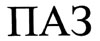
Copyright Holder — “Pavlovsky Bus Plant” LLC
Products/Services — 12 — buses
Date of Public Knowledge — 25.06.2019
Number in the List - 267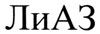
Copyright Holder — “Likinsky Bus Plant” LLC
Products/Services — 12 — buses
Date of Public Knowledge — 11.08.2019
Number in the List - 268
Copyright Holder — “Pavlovsky Bus Plant” LLC
Products/Services — 12 — buses
Date of Public Knowledge — 25.06.2019
Number in the List - 269
Copyright Holder — “TECHNONICOL” JSC
Products/Services — 06, 17, 19 — roofing materials
Date of Public Knowledge — 01.01.2022
Number in the List - 270
Copyright Holder — Fastrunner Investments Ltd. (Cyprus)
Products/Services —35, 36 — collection and dissemination
of information about real estate objects
Date of Public Knowledge — 28.12.2021
Number in the List - 271
Copyright Holder —Fastrunner Investments Ltd. (Cyprus)
Products/Services — 35, 36 — 35, 36 — collection and dissemination of information about real estate objects
Date of Public Knowledge — 28.12.2021
Number in the List - 272
Copyright Holder — “Synergy” University
Products/Services — 41 — educational services
Date of Public Knowledge — 01.01.2020
During the same period, Rospatent refused to recognize the following designations as well-known marks:
 (decision of Rospatent dated March 14, 2025 № 2024В00880)
The status of well-known was requested in relation to goods of class 29 of the International Classification of Goods and Services (yogurt, cottage cheese), as well as
 (decision of Rospatent dated March 14, 2025 № 2024B00449)
the wellknown status of which was sought in relation to goods of class 29 of the International Classification of Goods and Services (ICGS), “cheese, butter.” The applicant in both cases was “Savushkin Product” OJSC (Belarus). According to Rospatent, the evidence presented does not confirm the intensive use of these designations or their wide recognition among consumers. These refusals were issued by Rospatent following a re-examination of the submitted applications after the Intellectual Property Court declared Rospatent’s previous refusals illegal;
 (decision of Rospatent dated June 17, 2025 № 2023В00641). “Kizlyar Cognac Factory” JSC requested recognition of this designation as a well-known trademark for goods in Class 33 of the International Classification of Goods and Services (ICGS), “brandy.” Rospatent’s decision noted that the submitted documents do not confirm either the wide recognition of the designation by consumers or its connection with the applicant;
 (decision of Rospatent dated July 21, 2025 № 2024B02872). “Dzhileks” LLC requested recognition of the well-known nature of this designation in relation to goods classified under Class 7 of the International Classification of Goods and Services (ICGS), “household water supply pumps.” Rospatent’s decision stated that the materials submitted by the applicant do not confirm the intensive use and widespread familiarity of the claimed designation among consumers, as many of the documents submitted indicate the use of other designations on the goods.
СТАРЕЙШИНА (decision Rospatent dated July 21, 2025 № 2024B02749), which “SMART KRAFT” LLC requested to be recognized as well-known in relation to the product (Class 33 of the International Classification of Goods and Services, “brandy”). Rospatent’s decision acknowledged the intensive use of the claimed designation in relation to the product specified in the application, but the materials submitted do not confirm a connection between this designation and the applicant.
2. Appellations of Origin of Goods and Geographical Indications
In March-August 2025, Rospatent registered geographical indications (GI) and Appellations of origin of goods (AOG):
(Number in the Register of Geographical Indications and Appellations of Origin — Geographical indication/appellation of origin — Goods — Region)
374 (AOG) — BENTONITE OF KHAKASSIA — bentonite clay, bentonite clay powder, bentonite granules — Republic of Khakassia
375 (GI) — ZAVITINSKY HONEY — natural honey — Zavitinsky District of Amur Oblast
376 (AOG) — SIMBIRCITE — simbircite, decorative, applied, and utilitarian products made from simbircite — Ulyanovsk and Ulyanovsk district of the Ulyanovsk
region
377 (AOG) — KOPORSKY TEA — herbal tea (Ivan-tea) — Koporskoye rural settlement, Lomonosovsky district, Leningrad region
378 (GI) — PECHORA GINGERBREAD — printed gingerbread cookies — Pechorsky District of the Pskov Region
379 (GI) — BELGOROD OIL — sunflower oil — Belgorod Oblast
380 (GI) — TSAREVOKOKSHAISKY HAM — dry-cured ham — Yoshkar-Ola, Republic of Mari El
381 (GI) — KARELIAN MARMALADE — marmalade — Republic of Karelia
382 (GI) — BOGUCHAR SEEDS — roasted sunflower seeds — Bogucharsky District of the Voronezh Region
383 (GI) — KARELIAN IVAN-TEA — herbal tea (Ivan-tea) — Republic of Karelia
384 (GI) — BELORECHESKOYE EGG — edible chicken eggs — Belorechenskoye urban settlement of Usolsky district of Irkutsk region
Intellectual Property News of the Eurasian Economic Union and Neighboring Countries
1. Eurasian Patent Organization
Approved order registration transition rights, collateral rights and changes name or names applicant or patent holder in relation Eurasian applications and Eurasian patent on industrial sample
By the order of the President of the Eurasian Patent Office dated April 28, 2025 № 36 approved The procedure for registering and canceling the registration of the transfer of the right to obtain a Eurasian patent for an industrial design, the exclusive right to an industrial design, the pledge of the exclusive right to an industrial design, the change of the name or title of the applicant or patent owner, as well as the registration of the termination of the pledge of the exclusive right to an industrial design.
The procedure regulates the grounds for carrying out the registration procedure, the requirements for the registration application and the documents submitted with it, determines the timeframes and procedure for considering the application and making a decision on it, as well as the procedure for interaction between the Eurasian Patent Office and interested parties during this procedure.
Exchange copies previous national applications
On April 29, 2025, the Eurasian Patent Office informed users of the Eurasian patent system about the possibility of submitting certified copies of previous national applications from EAPC member states in electronic form as part of the procedure for claiming conventional priority.
The exchange of certified copies of previous applications (priority documents) between national patent offices (NPOs) of the states parties to the EAPC and the EAPO is regulated by the “Procedure for the electronic exchange of copies of previous applications and applications for the grant of Eurasian patents within the framework of Eurasian patent procedures”.
Based on such a request by the applicant, filed with the national patent office, and subject to appropriate payment, the national office of the state party to the EAPC prepares a certified copy of the previous one in electronic form and itself sends it to the EAPO via secure data transmission channels, notifying the applicant of such sending.
Services official publications EAPO launched on new platform
On August 29, 2025, the Eurasian Patent Office announced that, as part of its efforts to improve its information systems, the Office had updated the following electronic services on the EAPO website:
- Electronic bulletin “Inventions”
- Electronic bulletin “Industrial samples”
- Eurasian server of publications
- Registry of Eurasian patents on inventions
- Registry of Eurasian patents on industrial samples
- Registry of published applications on industrial samples
2. Georgia
Georgia joined to the Lisbon system registration of GIs and AOGs
On June 14, 2025, the Government of Georgia deposited with the Director General of WIPO its instrument of accession to the Geneva Act of the Lisbon Agreement on Appellations of Origin and Geographical Indications (hereinafter referred to as the Geneva Act).
The Geneva Act of the Lisbon Agreement entered into force for Georgia on October 14, 2025. From this date, Georgia may be indicated in international applications for registration of GIs and AOGs under the Lisbon system.
3. Belarus
Patent department has published data on its work in 2024 year
On March 31, 2025, the National Center of Intellectual Property of the Republic of Belarus published a Report on the agency’s work for 2024 on its website.
4. Kazakhstan
Kazakhstan admitted EAPO as International search organ (ISA)
On May 5, 2025, Kazakhstan recognized the Eurasian Patent Office as an International Searching Authority (ISA) under the Patent Cooperation Treaty (PCT). This recognition allows applicants from Kazakhstan to choose the EAPO as the ISA for their international applications filed under the Patent Cooperation Treaty (PCT) in Russian.
Currently, the EAPO acts as a competent International Searching Authority (ISA) and International Preliminary Examining Authority (IPEA) under the Patent Cooperation Treaty (PCT) for applicants from all eight member states of the Eurasian Patent Organization.
Kazakhstan joined To Marrakesh agreement
On April 14, 2025, the Government of Kazakhstan deposited with the Director General of WIPO its instrument of accession to the Marrakesh Treaty to Facilitate Access to Published Works for Persons Who Are Blind, Visually Impaired, or Otherwise Print Disabled.
The Treaty entered into force with respect to Kazakhstan on October 14, 2025.
5. Uzbekistan
Installed individual duties for indication Uzbekistan in applications on international registration industrial samples by the Hague system
On June 20, 2025, WIPO has published a notice on individual fees payable in connection with an international application designating Uzbekistan and in connection with the renewal of an international registration designating Uzbekistan.
|
Type of duty |
Size (in Swiss francs) |
|---|---|
|
Fee for indication: |
|
|
for one sample |
262 |
|
for each subsequent sample in the application |
43 |
|
Renewal fee: |
|
|
for the first extension |
284 |
|
for the second extension |
437 |
The Geneva Act of the Hague Agreement entered into force for Uzbekistan on January 10, 2025. From this date, Uzbekistan can be indicated in applications for international registration of an industrial design.
To access this website, we request that you read and accept the Terms of Use.