

Legal Aspects of Compulsory Licensing in the Pharmaceutical Sector in Russia
5 September 2025The Global IP Matrix, issue 23
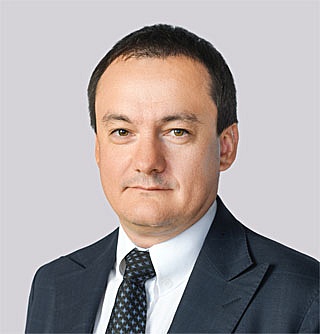
Ph.D., Senior Partner, Russian Trademark & Design Attorney, Eurasian Design Attorney
Head of Legal, Trademark & Design Practice
International Framework
Legal Framework in Russia
Conclusion
Compulsory licensing of pharmaceutical patents represents one of the most complex intersections of IP law, public health policy, and market economics. As a legal mechanism permitting third-party production of patented medicines without the patent holder’s consent, it captures the fundamental tension between incentivising innovation through patent protection and ensuring widespread access to essential therapies.
Before the COVID-19 pandemic, Russia had never used compulsory licensing. Though both international and Russian law allow for such measures, they remained unused until the unprecedented crisis caused by the virus. When deaths skyrocketed daily, the Government had no choice but to take drastic measures, including compulsory licensing, to ensure access to essential medicines. In these specific cases, Russia resorted to compulsory licensing as a last resort to guarantee availability of critical medications. Each compulsory license was issued with a limited duration.
Basically, the Russian legislation envisages two types of compulsory licensing (CL):
- As a non-exclusive license which may be granted based on a court decision in case of non-use or insufficient use of an invention, or in case of patent dependency; Or
- As a permission granted by the Government to a selected manufacturer in cases of extreme necessity related to ensuring the defence and security of the state, protecting the lives and health of citizens, or for exporting to another state in accordance with an international treaty.
In recent years, the issue has grown more urgent in Russia as several international pharmaceutical companies have withdrawn from the Russian market, creating risks of drug shortages and jeopardising the availability of modern treatments. This exodus stems from various geopolitical and economic factors, leaving critical gaps in the supply chain. Concurrently, Russian generic manufacturers have intensified their efforts, initiating court proceedings to acquire compulsory licenses for patented inventions protecting original medications.
Between 2022 and 2025, the number of intellectual property disputes in Russia’s pharmaceutical sector doubled compared to the previous five-year period (2017– 2021), reaching a total of 100 cases over seven years1. These disputes include patent validity, patent infringement and compulsory licensing cases initiated by a few local generic companies.
International Framework
The concept of compulsory licensing is not new and has roots in international IP treaties to which Russia is a party. The Paris Convention (1883) was among the first international agreements to recognise the possibility of compulsory licensing as a measure to prevent abuses of patent rights. Article 5A(2) of the Convention explicitly allows member states to adopt legislative measures to grant compulsory licenses if the patent holder fails to work the invention locally or engages in anti-competitive practices.
The TRIPS Agreement, adopted in 1994 as part of the WTO framework, further refined the rules governing compulsory licensing. Article 31 of TRIPS sets forth specific conditions that must be met for the issuance of a compulsory license. These provisions were designed to strike a balance between protecting intellectual property rights and addressing public health needs.
The Doha Declaration on TRIPS and Public Health (2001) reaffirmed this balance, explicitly stating that TRIPS should not prevent member states from taking measures to protect public health, including through compulsory licensing.
Many countries have adopted special provisions in their patent laws regulating the issuance of compulsory licenses. The grounds for granting compulsory licenses vary depending on the position of each country and its legislation. For instance, European Union Regulation (EC) No 816/2006 allows compulsory licensing for export to countries with public health problems, emphasising proportionality and transparency. In May 2025, the European Union reached a political agreement to introduce a unified mechanism for compulsory licensing in emergency situations, which is expected to enter into force after formal approval by the European Parliament and the Council of the EU2. The new mechanism will be activated only after an official declaration of a crisis at the European level, such as a pandemic outbreak or natural disaster. This measure is intended to facilitate rapid access to essential medicines and technologies.
However, compulsory licensing in such cases is considered a measure of last resort and will be applied only after unsuccessful attempts to reach voluntary agreements with rights holders.
This demonstrates that compulsory licensing is generally treated as an exceptional measure, reserved for situations where voluntary solutions are unattainable and public interest demands intervention.
Legal Framework in Russia
In Russia, the Government is also focused on ensuring that the mechanism of compulsory licensing is applied only in cases of genuine threats to national defence, security, or the lives and health of citizens. To achieve this goal, pursuant to the Government Resolution No. 380 of March 27, 2024, a subcommission was established to address issues related to the use of inventions, utility models, and industrial designs.
This subcommission establishes rules and principles for its operation, as well as a transparent procedure for processing applications and determining the grounds for granting permissions.
Initially, an application must be submitted to the Ministry of Economic Development. If it meets the specified requirements, the Ministry forwards it to the Ministry of Industry and Trade, the Federal Service for Intellectual Property, the Federal Antimonopoly Service, and the agency responsible for the relevant area of activity, such as the Ministry of Health or the Ministry of Defense. These agencies are required to submit conclusions on the application within their competence, indicating whether permission can or cannot be granted. Upon receiving these documents, the Ministry of Economic Development prepares a conclusion and makes a final decision on whether to grant permission.
The emergence of the subcommission on compulsory licensing in Russia marks a significant step forward in clearly defining the procedure and conditions for granting compulsory licenses. The new approach minimises subjectivity and increases transparency, preventing arbitrary application of the compulsory licensing mechanism, thereby emphasising its exclusively emergency nature.
Meanwhile, although obtaining Government permission can be a cumbersome process for generic companies, most prefer to pursue the court procedure, which allows them to claim a compulsory license to be granted under the legal provisions of Article 1362 of the Civil Code. This article outlines two specific grounds for granting a compulsory license:
- Non-use or insufficient use of the invention: when the patent holder has not commercially exploited the invention in Russia for a period of four years from the patent grant or where the patent holder’s exploitation of the invention does not meet market demand (Para 1 of Article 1362);
- Patent dependency: if a patent holder cannot use his invention without infringing another patent holder’s rights and the latter refuses to grant a license on reasonable terms (Para 2 of Article 1362).
While non-use is relatively straightforward to determine, insufficient use introduces significant legal ambiguity. The law does not define what constitutes “sufficient” use, leaving courts to interpret this standard on a case-by-case basis. This has led to inconsistent rulings and created challenges for both patent holders and generic manufacturers seeking licenses.
The lack of clear criteria for determining insufficient use has resulted in divergent judicial approaches. Some courts have relied on quantitative metrics, such as the volume of drugs supplied relative to the number of patients, while others have considered qualitative factors, such as the affordability and accessibility of the medication.
For example, in a case No.А40-185112/2022 handled by the Commercial Court of Moscow involving a patented drug, the court in 2023 ruled that the patent holder’s failure to participate in all government tenders constituted insufficient use since the total number of the supplied drugs did not correspond to the registered number of patients with the particular disease. In this case, the court preferred to adopt an overly simplistic— and arguably misguided—approach: assessing drug demand based solely on statistical numbers of patients, then comparing these figures with market supply.
However, this method is inherently flawed, as it fails to account for the nuanced needs of individual patients and the diverse treatment strategies used by medical professionals. Physicians tailor prescriptions to each patient, considering factors like age, concurrent health conditions, allergies, contraindications, and other individual circumstances. Clearly, even when many people suffer from the same disease, a one-size-fits-all medication approach is unrealistic. Moreover, multiple drugs may be effective for the same diagnosis, further complicating demand projections for any single pharmaceutical.
Another ground for compulsory licensing occurs when the use of an invention is impossible without infringing the rights of another patent holder (dependency of patents). In such cases, the interested party has the right to seek a compulsory license in court if the original patent holder refuses to conclude a licensing agreement on reasonable terms.
Significant conditions for granting a compulsory license under this ground include proving that the second invention represents a substantial technical achievement and provides noticeable economic advantages compared to the invention owned by the first patent holder.
Russian judicial practice has already seen several cases involving this norm, such as the case A40-71471/17-110-675 and case A40-166505/2017. In these cases, courts concluded that all necessary conditions for issuing a compulsory license were present. However, some aspects remain controversial. For example, judges face the challenge of assessing the significance of the technical and economic advantages of the dependent invention, which often leads to difficulties and differences in judicial approaches.
These rare cases highlight the challenges courts face when issuing compulsory licenses for the first time, as current decisions lack clear grounding. The main issue stems from the absence of explicit criteria in both national laws and international agreements. Solutions could involve updating legislation or developing case law through higher courts. With that, it is important to note that Russian legislation is largely harmonised with international agreements and corresponds to the legal regulation of many countries worldwide; this is not a unique problem for this specific jurisdiction but rather a result of an absence of a general approach in international treaties with clear criteria for granting a compulsory license. Every country seeks its own approach. According to the AIPPI Compulsory License Summary Report Q293-SR-P-2025, 80% of respondents advocate for further harmonisation, pointing to inconsistencies in enforcement, remuneration, and procedural requirements across jurisdictions.
Conclusion
Undoubtedly, compulsory licensing can be useful in extreme situations such as pandemics or natural disasters, where access to essential medicines becomes a matter of survival. The mechanism is designed to strike a delicate balance between honouring patent holders’ rights and meeting urgent public health needs. However, its practical application raises significant challenges.
Production of high-quality medicines is a complex process that transcends publicly available patent information. Crucially, it often depends on undisclosed trade secrets, such as proprietary manufacturing techniques or specialised equipment configurations, which are legally protected in Russia and cannot be subjected to compulsory licensing, unlike patents. The European Parliament and Council have also explicitly confirmed that rightsholders will not be obligated to disclose their trade secrets when invoking the compulsory licensing mechanism3.
However, these hidden components are essential for reproducing patented drugs reliably and safely. Since compulsory licensing typically applies only to patents and does not extend to trade secrets, licensees may lack the necessary knowledge and expertise to produce effective substitutes. As a result, even if a compulsory license is granted, the quality and safety of the reproduced drug may be compromised.
Instead of viewing compulsory licensing as a panacea, policymakers should focus on alternative approaches. One promising direction is voluntary licensing, where patent holders collaborate with governments or third parties to ensure broader access to life-saving treatments. This mechanism preserves patent holders’ rights while addressing public health emergencies. Another feasible option is encouraging localisation of production through partnerships between foreign companies and local manufacturers. Projects like SPIC (Special Investment Contracts) in Russia aim to incentivise foreign firms to establish local facilities, thereby increasing self-sufficiency in essential medicines.
In conclusion, compulsory licensing remains a valuable tool in times of crisis, but its application must be approached with great caution. Emphasising voluntary agreements and localised production provides a more sustainable path forward, minimising the risks associated with compulsory licensing while ensuring a healthier future for all. Protecting sensitive production stages as trade secrets may help maintain market balance and prevent unintended negative consequences.
To access this website, we request that you read and accept the Terms of Use.