Non-Use Cancellation Actions in Russia: Recent Practices and the ‘Malicious Interest’ Concept
1 May 2026
A Changing Background
General Approach to Non-use in Russia
Malicious Interest Concept
Conclusion
A Changing Background
In recent years, the practical landscape of trade mark protection in Russia has faced unique challenges. Since 2022, geopolitical shifts have affected the presence of foreign businesses on the Russian market, with a number of international companies reducing or suspending their activities.
These developments spurred certain market participants seeking to take advantage of the situation. A number of entities attempted to obtain rights to well-known international brands and benefit from their reputation.
Acting in bad faith, such entities file trade mark applications reproducing or closely imitating existing brands. These filings are rarely successful at the examination stage, as they are typically blocked by earlier rights. However, rather than abandoning their efforts, applicants initiate non-use cancellation actions against prior trade marks in order to remove the obstacles and register a similar or identical mark in their name.
It should be noted that the statutory grace period for non-use of a trade mark in Russia is three years. Following the suspension of business activities by a number of foreign companies starting from 2022 onwards, many trade marks are currently becoming formally vulnerable to non-use cancellation. This leads to lawsuits, a significant part of which appears to have been filed by brand squatters or even former local distributors acting in bad faith.
General Approach to Non-use in Russia
The mechanism for early termination of trade mark protection on the grounds of non-use is set out in Article 1486 of the Civil Code. Any interested person presuming the trade mark has not been in use during the consecutive three years may initiate a cancellation action.
The claimant must prove a legitimate interest in the cancellation action, or the claim will be dismissed.
Evidence of interest typically shows an intention to use a similar mark supported by preparatory steps.
At the same time, the rules applied to the defendants are more stringent. They must prove actual (not sham) use for each particular category of goods/services with respect to which the claimant has demonstrated interest: the principle of “homogeneity” is generally not applicable.
The only exclusion articulated by the Supreme Court of Russia refers to widely known trade marks: if a trade mark is proven to be “widely known” for specific categories, for which the defendant proves the use, its protection should also be maintained for the homogeneous goods. This concept is wellestablished in judicial practice and frequently applied in cases involving renowned brands.
Traditionally, this framework has been applied in a relatively formal manner. However, recent cases demonstrate that this approach is evolving.
Malicious Interest Concept
The increasing exploitation of non-use cancellation actions as a tool for acquiring famous brands has posed a challenge to the formal approach. While bad faith entities are often able to formally prove their interest with documents demonstrating preparations for market entry, a closer examination may reveal that such preparations are directed toward the appropriation of an existing brand’s reputation.
In this context, the Russian IP Court has begun to apply the concept of “malicious” interest, also referred to as “sham” or “abstract”. While not expressly defined in law, this concept is rooted in the general prohibition of abuse of rights and reflects a shift from a purely formal assessment of interest to a more substantive evaluation of the nature and purpose of such interest.
The essence of the malicious interest concept lies in the recognition that interest in cancellation may not be considered lawful if it is primarily motivated by the desire to exploit the reputation of a well-known trade mark. In such circumstances, the court may take into account the overall behaviour of the claimant, the choice of a particular mark, and the underlying commercial rationale.
One of the court cases illustrating this approach involves a Hong Kong-based company, Multigoods Production Limited, that sought cancellation of a number of VICTORIA’S SECRET marks in relation to certain categories of goods and services (Court case No.SIP-803/2024).
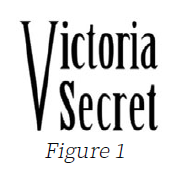 The company filed an application for the mark (Figure 1) closely resembling a famous brand for a wide range of products and provided evidence of preparation to use it.
Multigoods argued that the original marks, although widely known in relation to lingerie, were not used for other categories of goods and services.
The defendant demonstrated that the trade marks enjoyed wide recognition across a broad range of goods and services, including clothing, cosmetics, accessories, and retail services, and noted signs of abuse of rights in the claimant’s actions, arguing that the purpose of filing the claim was to capitalise on the brand’s reputation.
The court followed the traditional approach to wide recognition, retaining protection for goods and services in respect of which the trade marks had been established as widely known, as well as for similar goods, while cancelling them for non-similar goods.
However, the court further noted that, even though the claimant’s evidence formally proved interest in the action, such interest with regard to retained goods is malicious and aimed at deriving commercial benefits from the reputation of the famous brand.
The court made reference to the defendant’s arguments on abuse of rights, but mainly based its conclusions on defects of the claimant’s interest.
With the rise in actions against famous brands, courts’ perspectives appear to be shifting as they subject brand squatters’ claims to closer scrutiny.
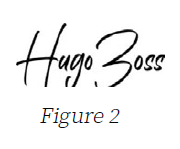 Recent cases involving HUGO BOSS and ZANUSSI trade marks (case Nos. SIP-1315/2024 and SIP-423/2024) demonstrate this shift. The HUGO BOSS case was also filed by Multigoods, which applied for the registration of the mark (Figure 2). The lawsuit against ZANUSSI trade marks was filed by a local company, Stroyresurs, LLC, which previously attempted to cancel other famous brands, such as CANON and AEG.
In these disputes, the Presidium of the IP Court applied a broader interpretation of the wide recognition concept and directly addressed the issue of bad faith and abuse of rights, taking into account the well-known nature of the trade marks and the absence of a convincing independent motive for their use by the claimants.
The Presidium noted that if a mark is widely known to consumers, the concept of malicious interest may extend not only to similar goods, but also to goods for which consumer associations may be transferred as originating from the trade mark owner. The wider the recognition of the trade mark, the broader the range of goods to which such associations may extend. The Presidium stated that, for the marks enjoying long-standing recognition globally, including Russia, such a transfer of association may occur even in relation to non-similar goods. For example, while ZANUSSI is widely known for household appliances such as kitchen stoves, ovens and the like, the consumers may still associate other technically complex goods, such as electronic door locks, with the original brand.
Further, the courts directly established bad faith and abuse of rights in the claimants’ actions, aimed at benefiting from the reputation of wellknown brands and misleading consumers, and constituting unfair competition. It was also noted that the companies are free to choose their trade marks, but if their good faith is doubted, they must explain why they chose a certain mark to the court. In this context, it may appear unusual when a mentioned Russian company seeks registration of a trademark containing an Italian surname “Zanussi,” despite having no apparent connection to it. No explanations were provided, and the claims were dismissed.
Conclusion
For owners of famous brands, these developments highlight the importance of not only maintaining evidence of genuine use, where possible, but also of demonstrating the reputation of their marks and the absence of legitimate interest on the part of the claimant. While strategies may vary case by case, arguments relating to bad faith and potential consumer confusion may serve as an effective additional line of defence for well-known trade marks.
To access this website, we request that you read and accept the Terms of Use.